03Resolution & Exhibition
Artist statement
I make work about what we are losing. Through drawing, painting, and mixed media, I keep returning to environmental destruction, species extinction, and the ways we are all caught up in it. This body of work is submitted under the theme of Protest. Not protest as noise, but protest as sustained attention: slow, careful, and drawn in sanguine.
Every piece begins with research into a specific ecological crisis. The near-extinction of the American bison. The poaching of rhinos. The collapse of wild salmon runs. The loss of polar ice. The clear-cutting of old-growth forests. That research shapes the work at every level, from the surreal shifts in scale that set tiny human figures against vast landscapes of destruction, to the decision to work on wood because depicting cut trees on a surface made from cut trees felt like the most honest choice I could make. Through the RHA programme, including masterclasses, group crits, mentored sessions, and sustained studio practice, I experimented with wetting, layering, and erasing sanguine, and tested what these materials could hold through trial work in abstraction, gold leaf, text, and found surfaces.
My practice sits within a lineage of artists who use beauty as a vehicle for confrontation. I chose sanguine, named from the Latin for blood, because it belongs to a centuries-old tradition of anatomical study while carrying something raw. Something between tenderness and violence. The tension between wanting to look and the discomfort of what you see is the engine of my work. I want the seductive quality of the drawing to pull the viewer in, then hold them there with the weight of what they are actually looking at.
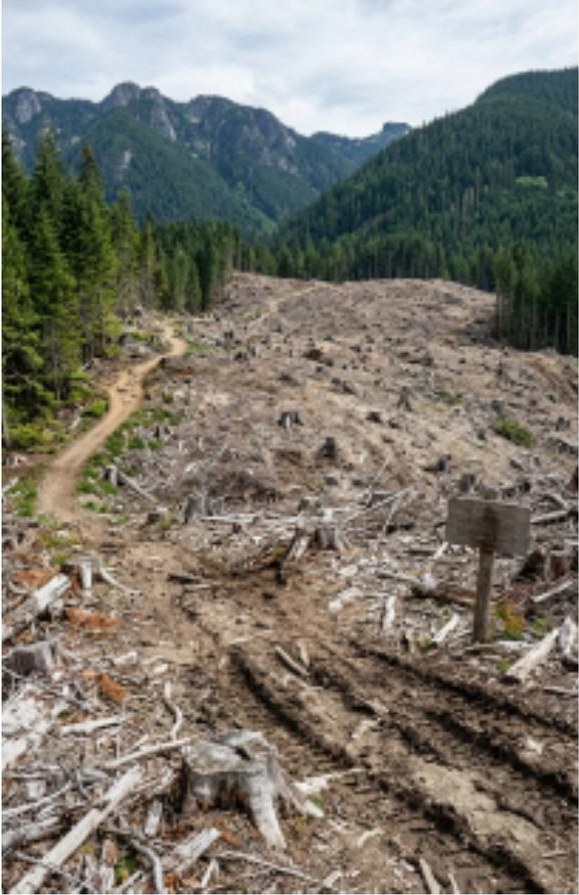
The six resolved works operate across two registers. The four large-scale works on paper, The Last Ice, The Last Passage, The Last Stand, and The Last Run, use surreal composition to confront the viewer with species loss and climate collapse. The two wood panel works, The Last Breath and The Last Tree, move toward something looser and more atmospheric, layering handwritten statistics into the image and letting the grain of the wood show through as part of the surface. Together, they show that drawing can carry the full weight of a serious contemporary practice, and that protest can move from the patient and seductive to the raw and confrontational.
I grew up in Singapore, lived in various countries and am currently based in Dublin. That movement across borders has shaped how I see environmental damage as something no country owns. By returning again and again to the creatures and landscapes being erased, I am insisting they matter.
These six works document what we are in the process of losing. Working in sanguine Conté, a material warm as skin, I use mark-making to bear witness to ecological collapse: vanishing ice, extinct species, clear-cut forest. Seduction is always the mechanism. You are drawn in before you fully understand what the work is asking of you. That is my protest.
The Last Ice
Ice · Sanguine and Conté on paper
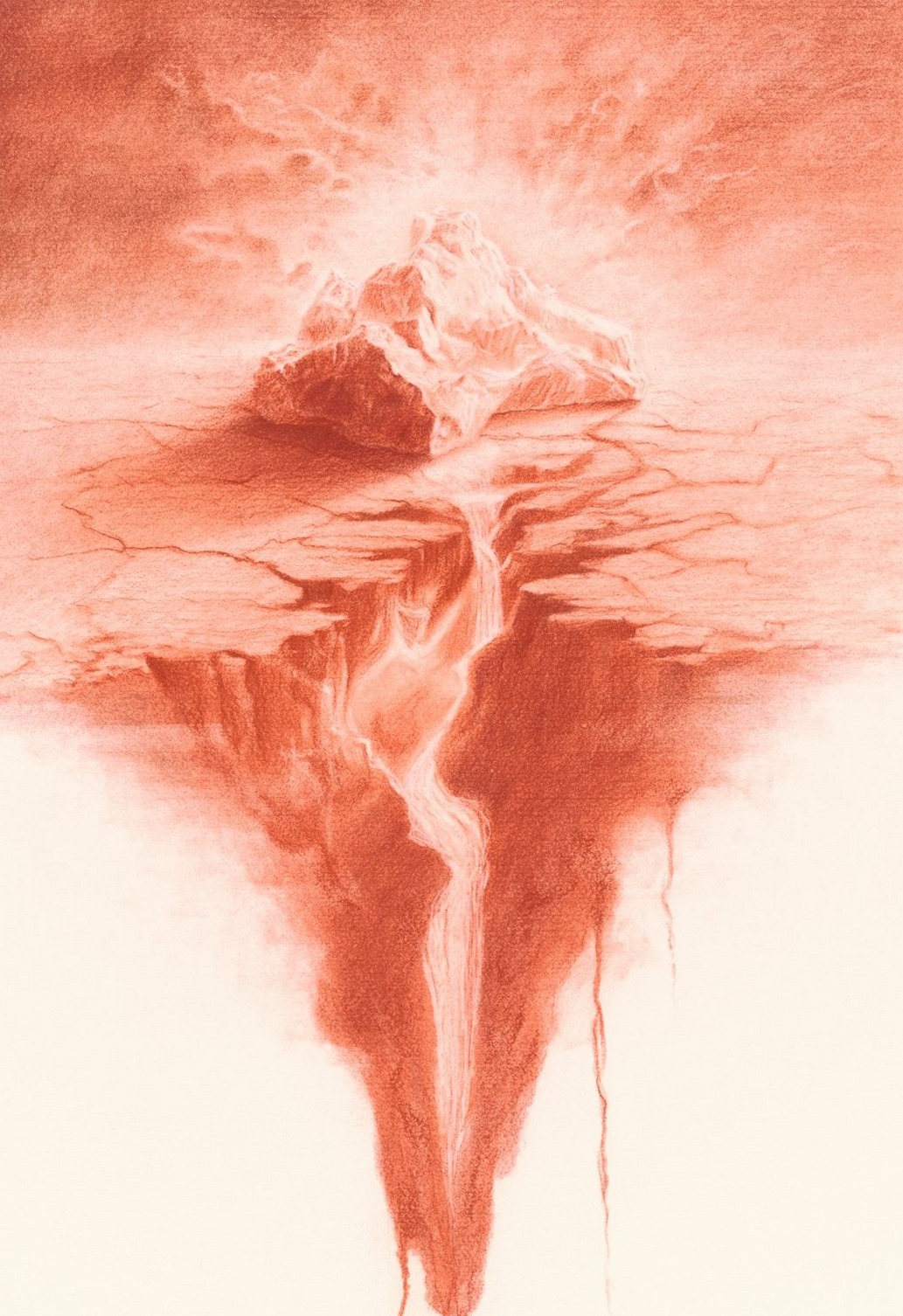
The smallest remnant of the ice cap dissolves into dripping tendrils of meltwater, its mass collapsing from solid form into liquid disappearance. The piece confronts the accelerating loss of polar ice and the irreversibility of climate tipping points.
Research & reference
The research behind The Last Ice drew on scientific records of polar ice retreat, including before-and-after imagery showing the speed of glacial collapse over the past two decades. I was also looking at the visual language of sublime landscape painting, particularly the 19th-century tradition of depicting icebergs as monumental, almost sacred forms. I wanted to use that sense of awe but turn it toward grief. The decision to let the ice form dissolve and drip beyond the edges of the composition came from the research itself. The data makes clear that what is happening to polar ice is not containable. It will not stay within borders. I wanted the drawing to behave the same way, refusing to stay neatly within its frame, bleeding out like meltwater.
- Medium
- Sanguine Conté on Fabriano Artistico 640gsm
- Size
- 56 × 76 cm
- Price
- €900
Sketches and ideas
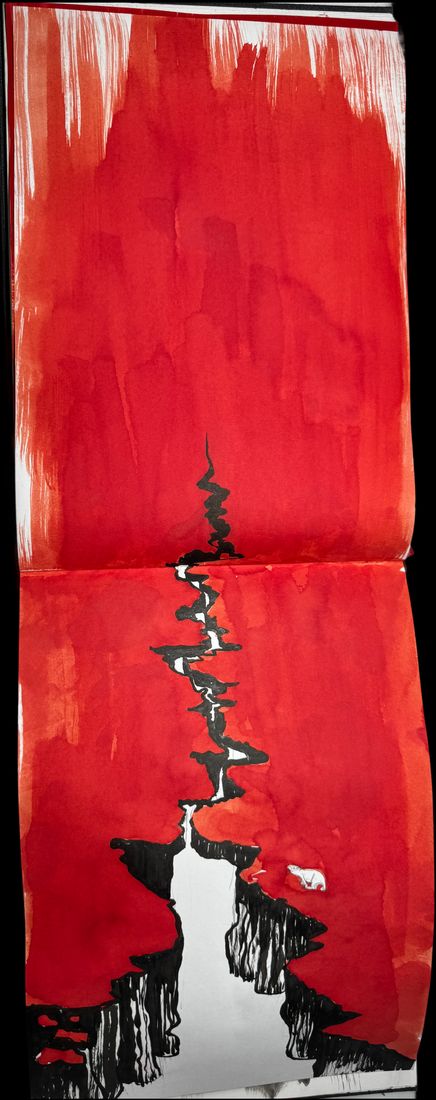
This sketch was the conceptual and compositional starting point for what later became The Last Ice. I was imagining a scorched landscape in which the ice had melted into water, opening up into a vast crevasse, with a small polar bear placed at the edge. What interested me most here was the elongated vertical format, the canyon-like space, and the idea of ice transforming into water. Although I felt the polar bear itself was a little too twee, the image contained the core elements that I wanted to keep exploring. From this point, I moved away from the bear motif and back toward sanguine, which led me to develop the piece further into what became The Last Ice.
Process
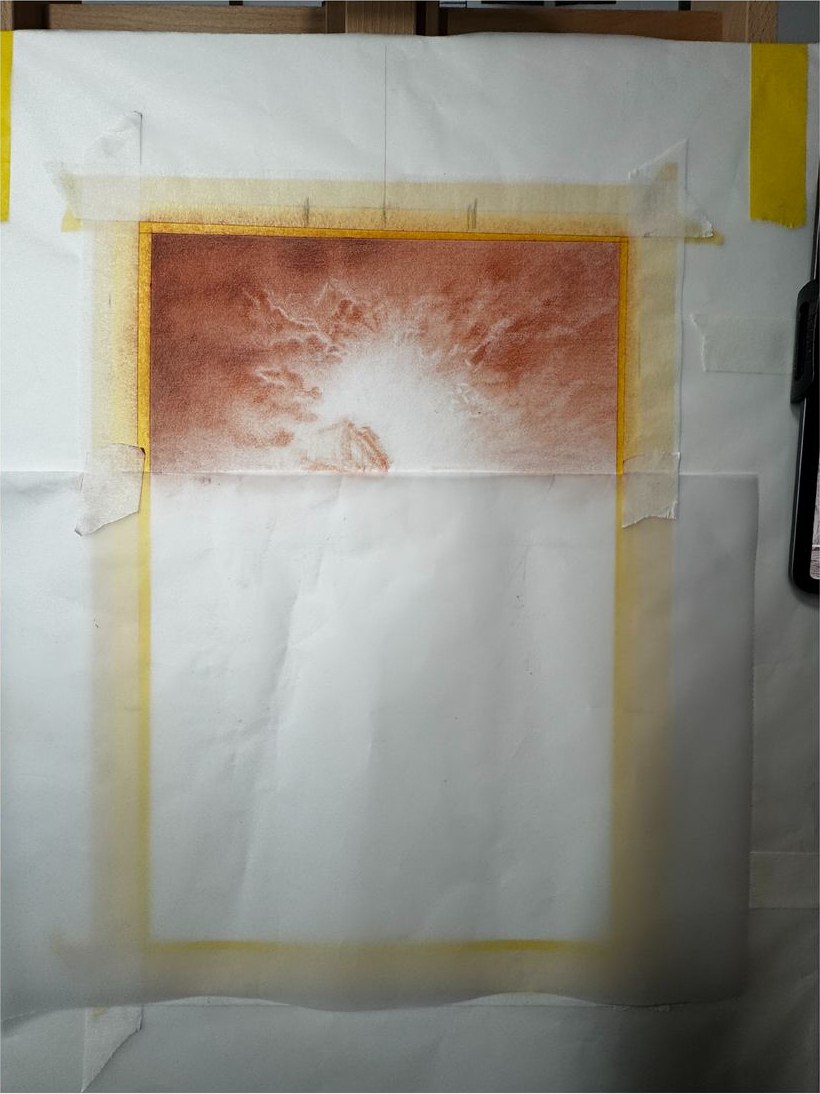
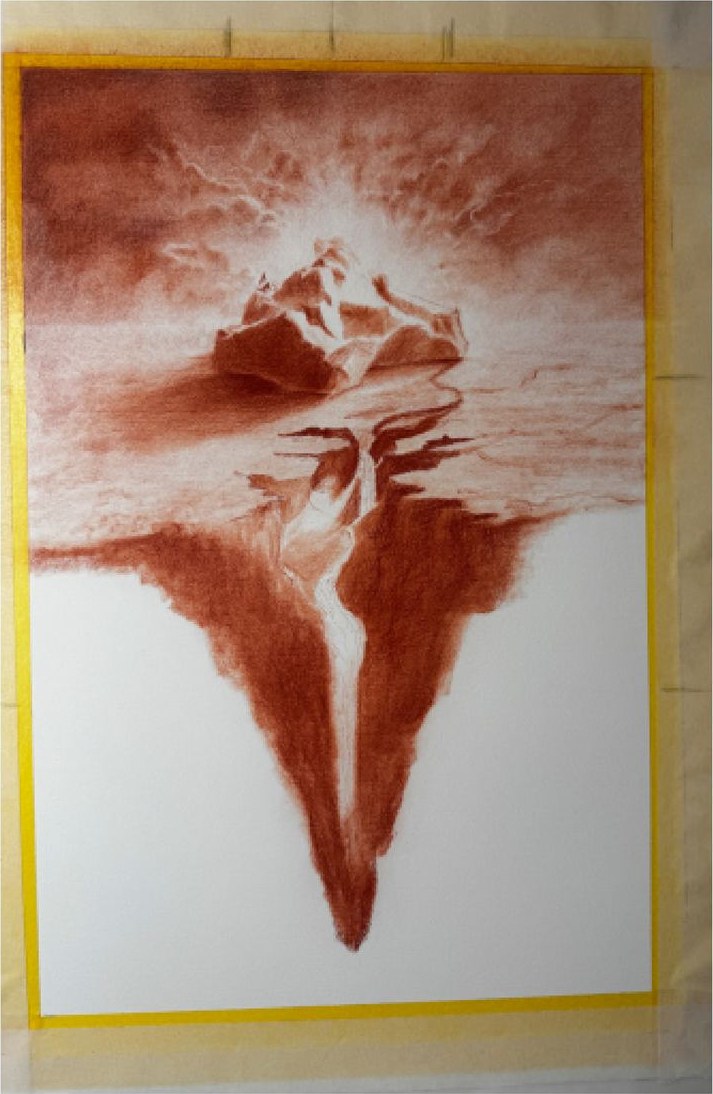
This piece was made entirely dry. I knew I wanted to preserve the deckled edge and place the image within a large field of white space, so I spent a lot of time carefully masking the paper. I cut a window out of tracing paper, masked it in place, and worked from the top down, remasking as I went in order to keep the surrounding paper clean and white. The image was built up slowly, mainly with pencil and eraser. Rather than fully drawing it out in advance, I worked more intuitively, using reference images of icebergs, crevasses, and clouds, but improvising the composition as it developed. One important decision came later in the process. I had not planned from the outset to leave the lower section unfinished, but once I reached that point, I realised I liked the dripped, dissolving quality of it. It echoed the idea of melting water, and felt more powerful than fully resolving the bottom half.
Details
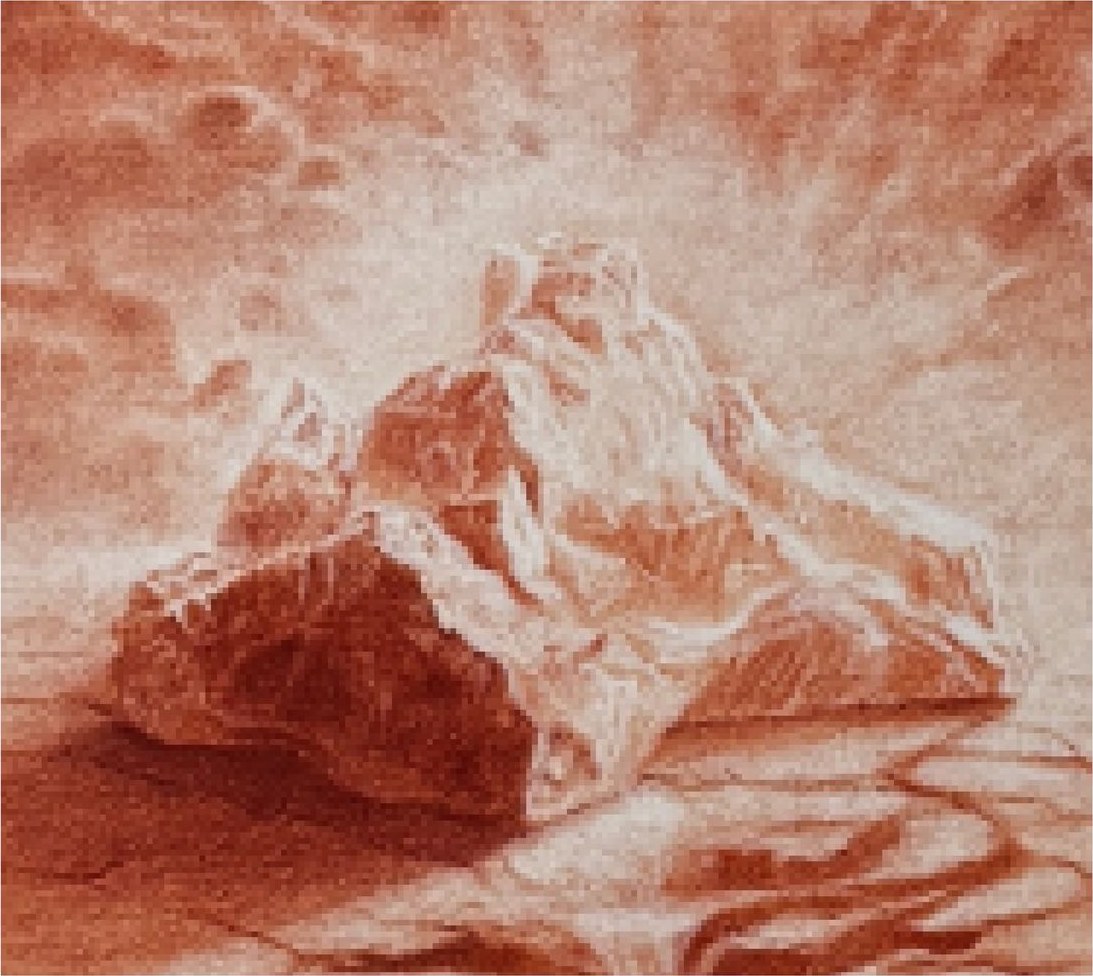
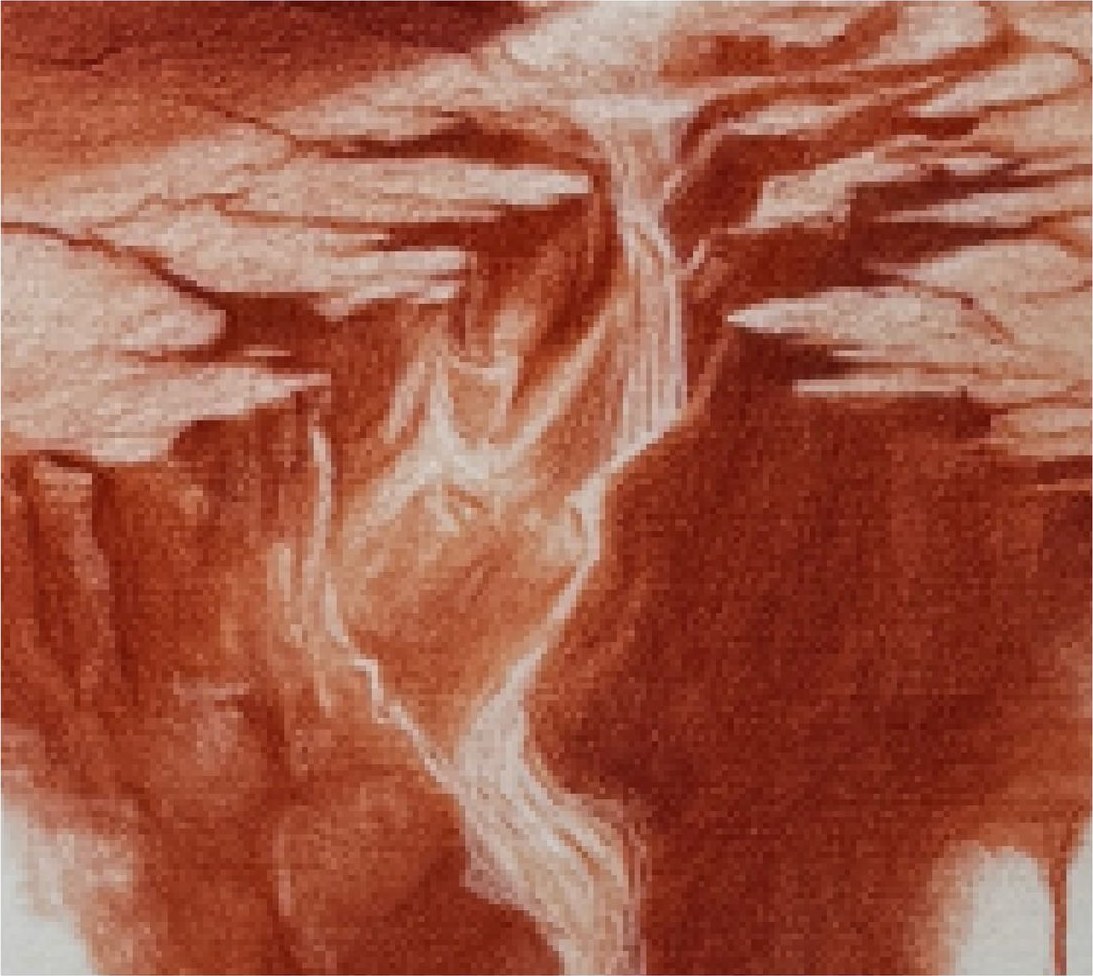
Once the composition was in place, I began using reference images for some of the finer details, including AI-generated references. These were particularly useful for developing the light in the water and the subtle textures and highlights within the ice. I’m very pleased with how the final piece works both at close range and from a distance.
The Last Passage
Rhino · Sanguine and Conté on paper
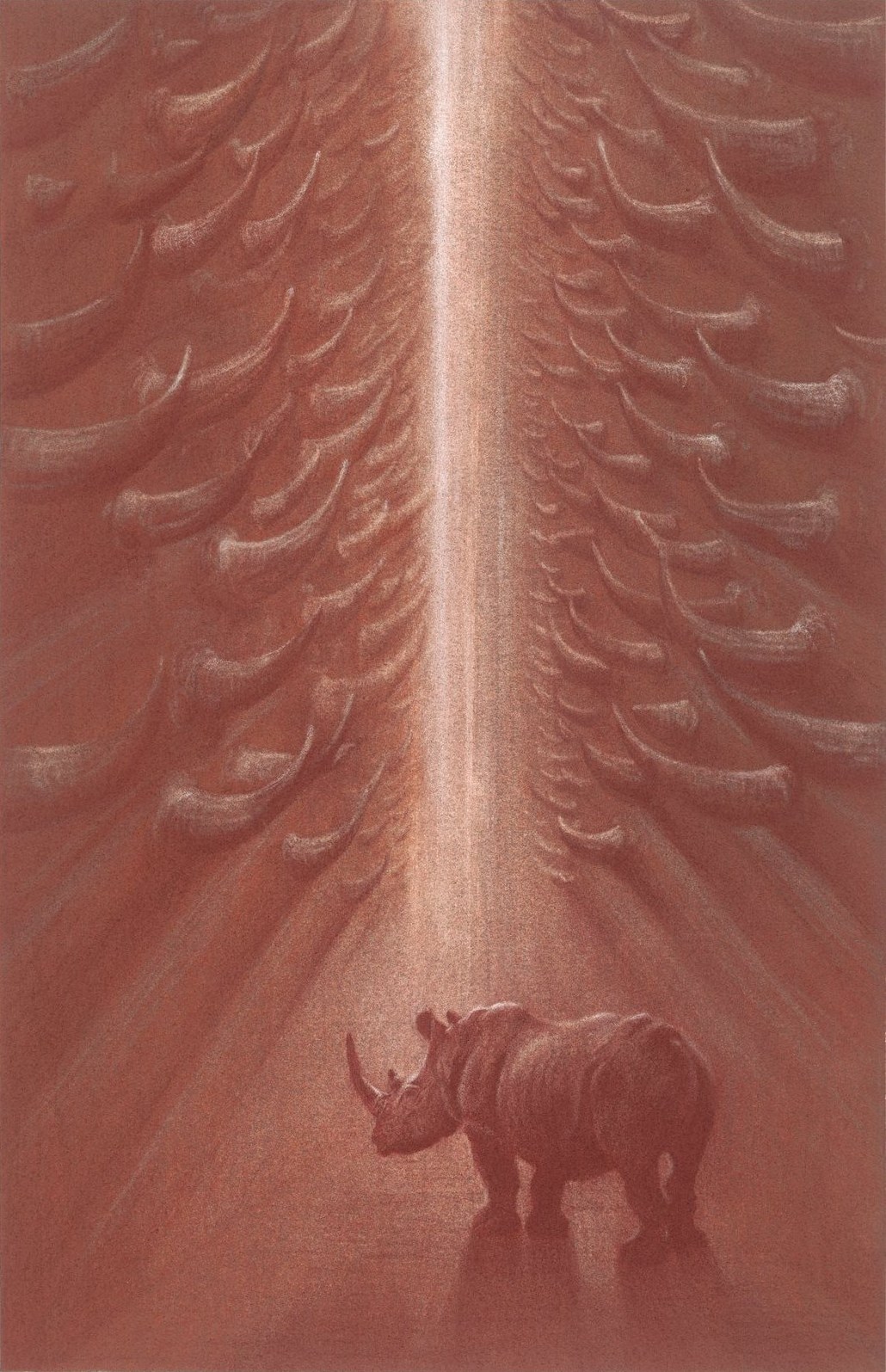
A solitary black rhinoceros walks through a narrowing corridor formed by hundreds of severed horns. The piece speaks to the poaching crisis that has pushed multiple rhino species to the edge of extinction, driven by the illegal horn trade.
Research & reference
The poaching crisis facing rhinos is driven almost entirely by demand for their horns, which are sold illegally for use in traditional medicine and as status symbols. Three of the five rhino species are critically endangered. I spent time studying the anatomy of the rhino, confiscation photographs, and conservation reports. The reference images of the animal seen from behind were important because they shift the encounter from confrontation to something closer to witnessing a departure. You are watching something leave, and the architecture of its destruction is all around it.
- Medium
- Sanguine Conté on Fabriano Artistico 640gsm
- Size
- 56 × 76 cm
- Price
- €900
Sketches and ideas
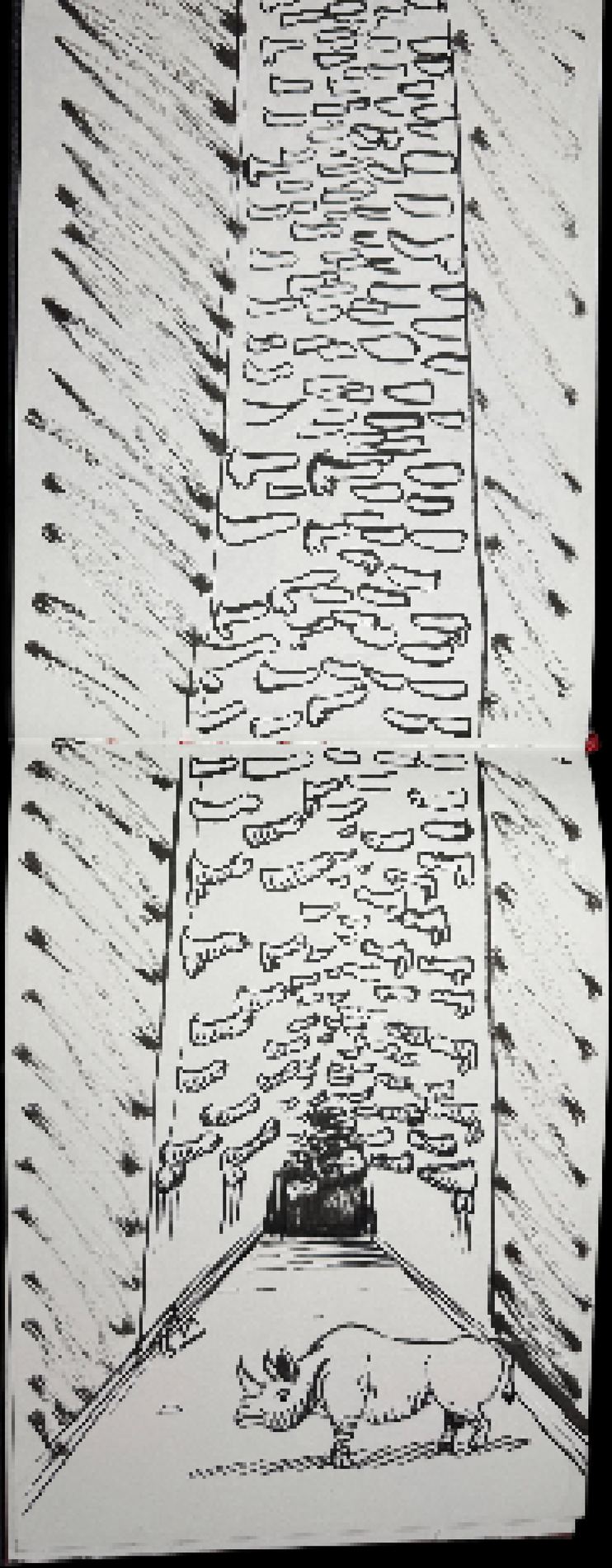
This was an early sketch for The Last Passage. I initially imagined the corridor filled with amputated penises, referencing the mythology around rhino horn as a source of virility and forcing the animal to move through that violence directly. When I came to make the final piece, I stopped short of depicting them so literally, although part of me still wishes I had. I also changed the rhino’s expression and turned it further away, which made the sense of leaving feel more poignant and elegiac.
Process
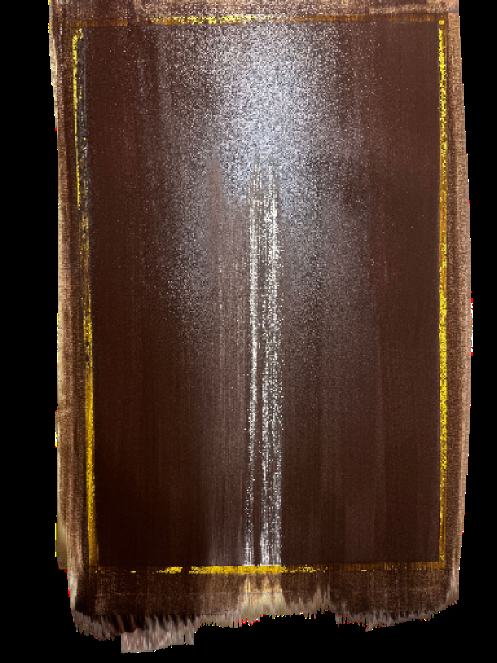
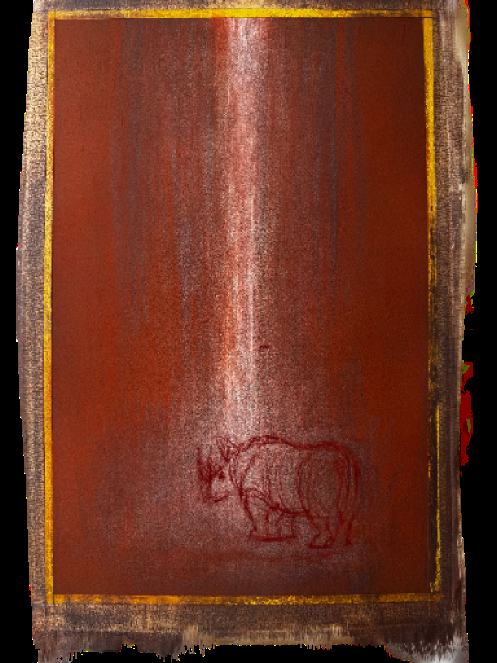
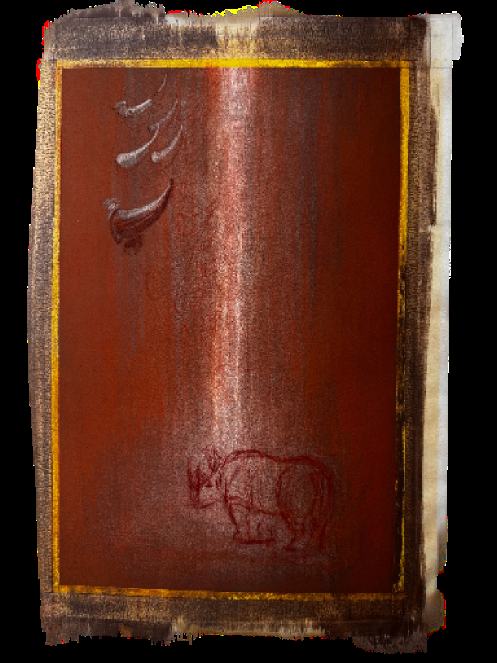
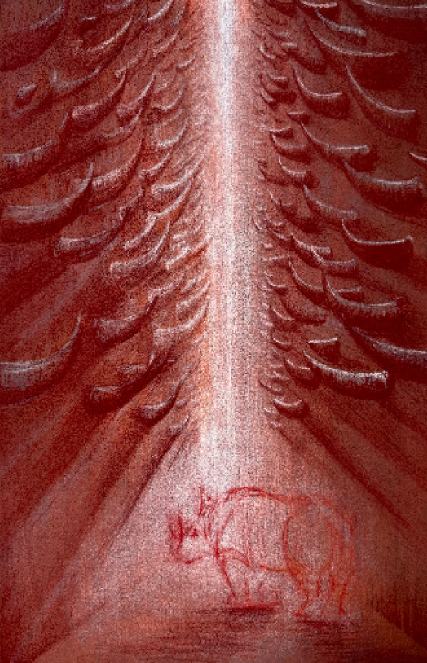
I believe this was the first piece I made in the series. It was done on Fabriano Artistico 640gsm. I mixed sepia and charcoal into a mud-like wash and painted it onto a masked surface, building up the image through multiple layers with sanguine added along the way. I worked into the surface both wet and dry, then erased out the shaft of light at the end of the corridor before sketching in the rhinoceros below. Once its placement felt right, I began adding the rhino horns and refining the details. Establishing the lighting and perspective was essential to making the space feel convincing. To do that, I used a string and a single light source to map the direction of the light, which was a really interesting part of the process. It also taught me that I needed a heavier weight paper, because while the image itself held up well, the masked white border buckled slightly after unmasking.
Details
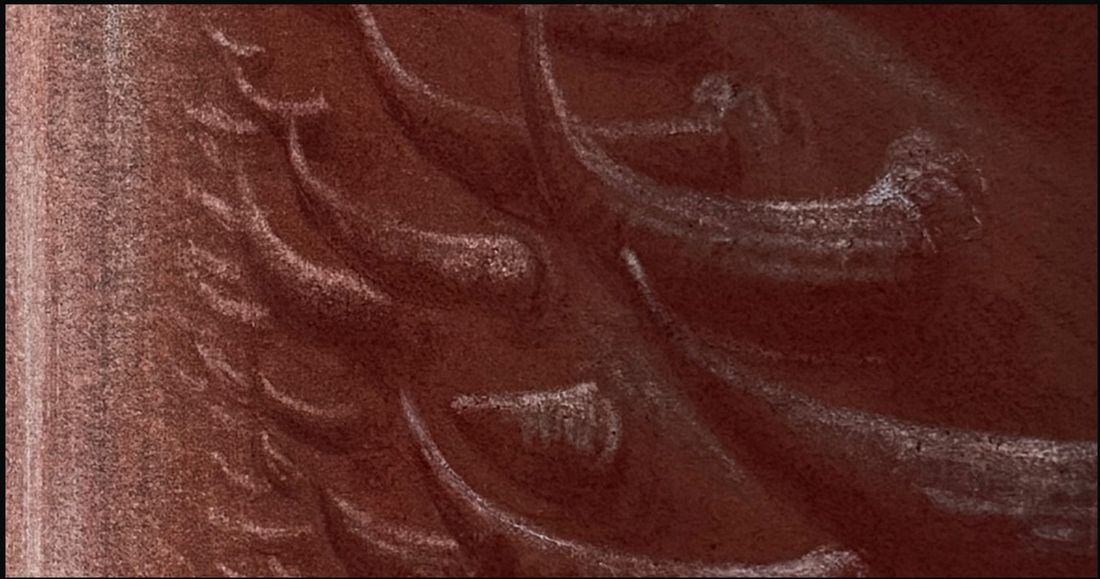
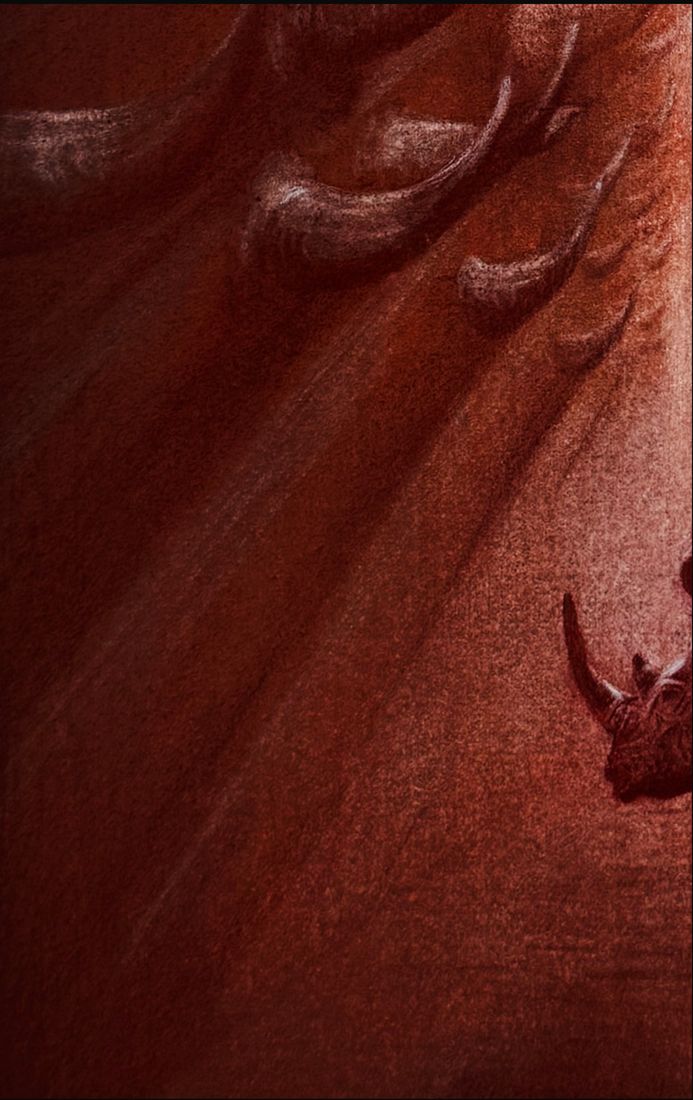
Close-up views showing the textural contrast between the rough, severed horn surfaces and the smoother, more carefully rendered skin of the living animal. This contrast was deliberate: the horns are matter, the rhino is presence.
The Last Stand
Bison · Sanguine and Conté on paper
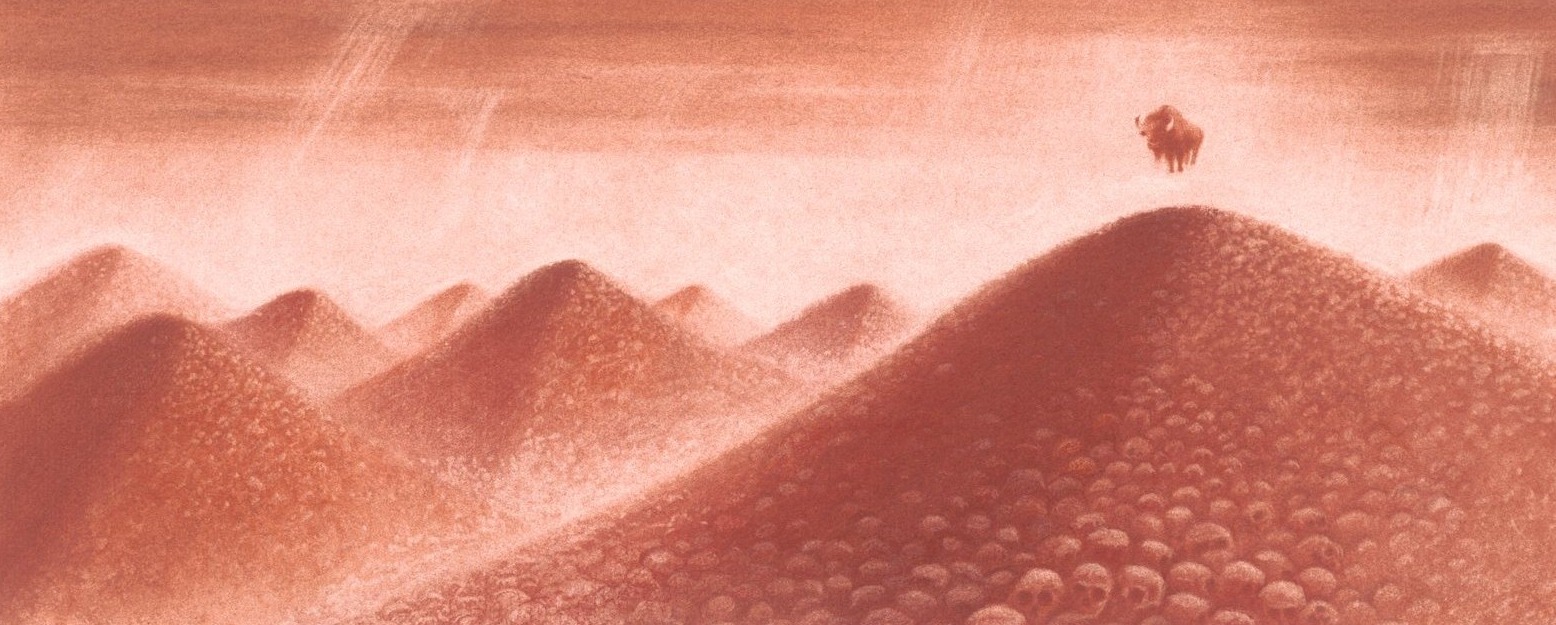
A lone bison stands atop mountains of skulls. In the 19th century, over 60 million American bison were slaughtered to near-extinction in order to wipe out the Native Americans. This piece reimagines that genocide as a surreal landscape of bone, with a single survivor surveying the remains of its species.
Research & reference
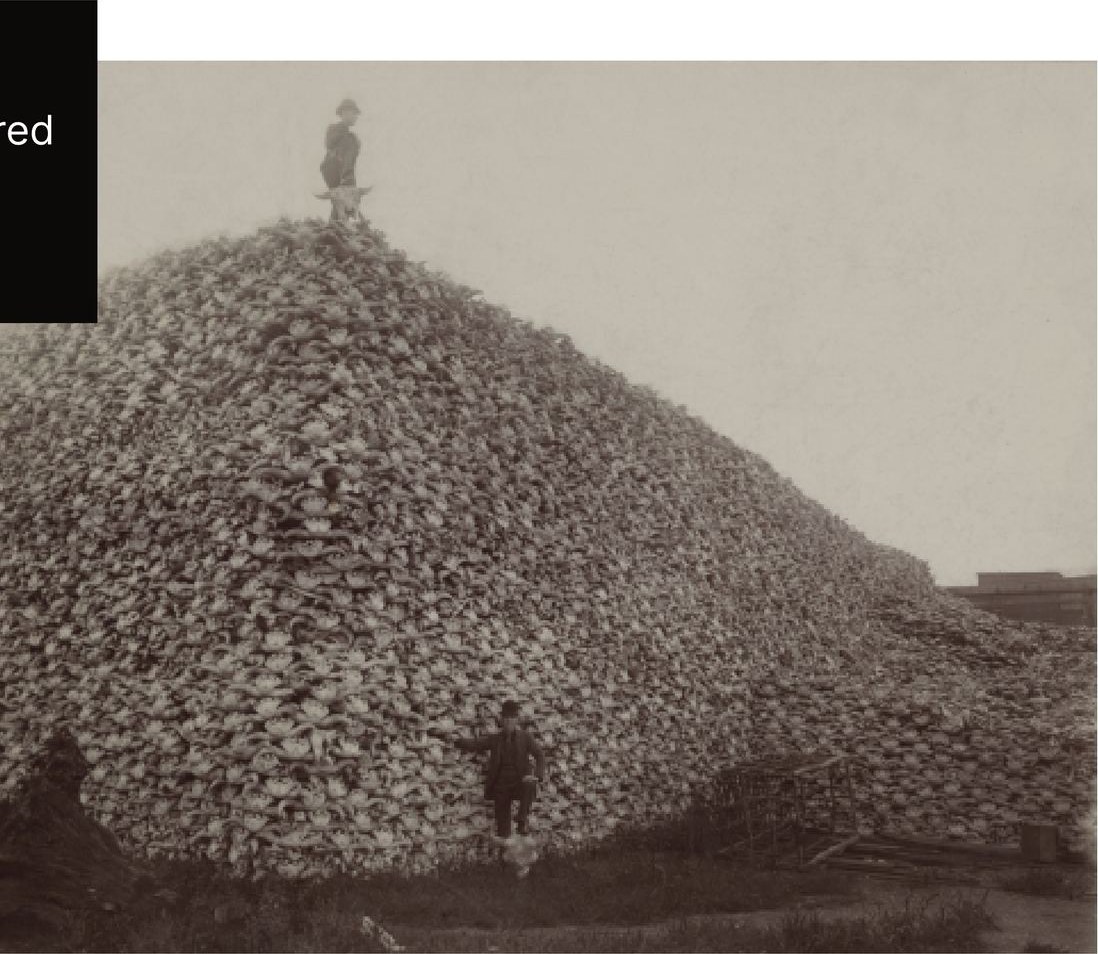
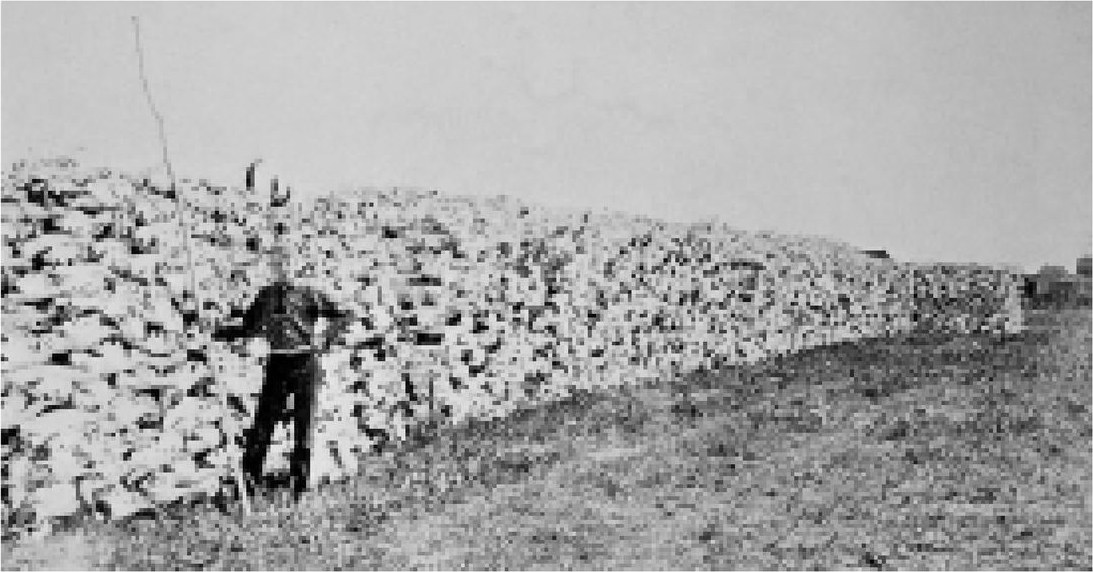
The bison skull mountains in these 1870s photographs are not metaphor. They are documentary evidence of one of the largest deliberate species destructions in recorded history. An estimated 60 million bison roamed North America before European contact. By 1889, fewer than 1,000 remained. The slaughter was systematic, politically motivated, and designed to destroy the food source and way of life of Indigenous peoples. This history became the foundation for the piece.
- Medium
- Sanguine Conté on Fabriano Artistico 640gsm
- Size
- 56 × 76 cm · landscape
- Price
- €900
Sketches and ideas
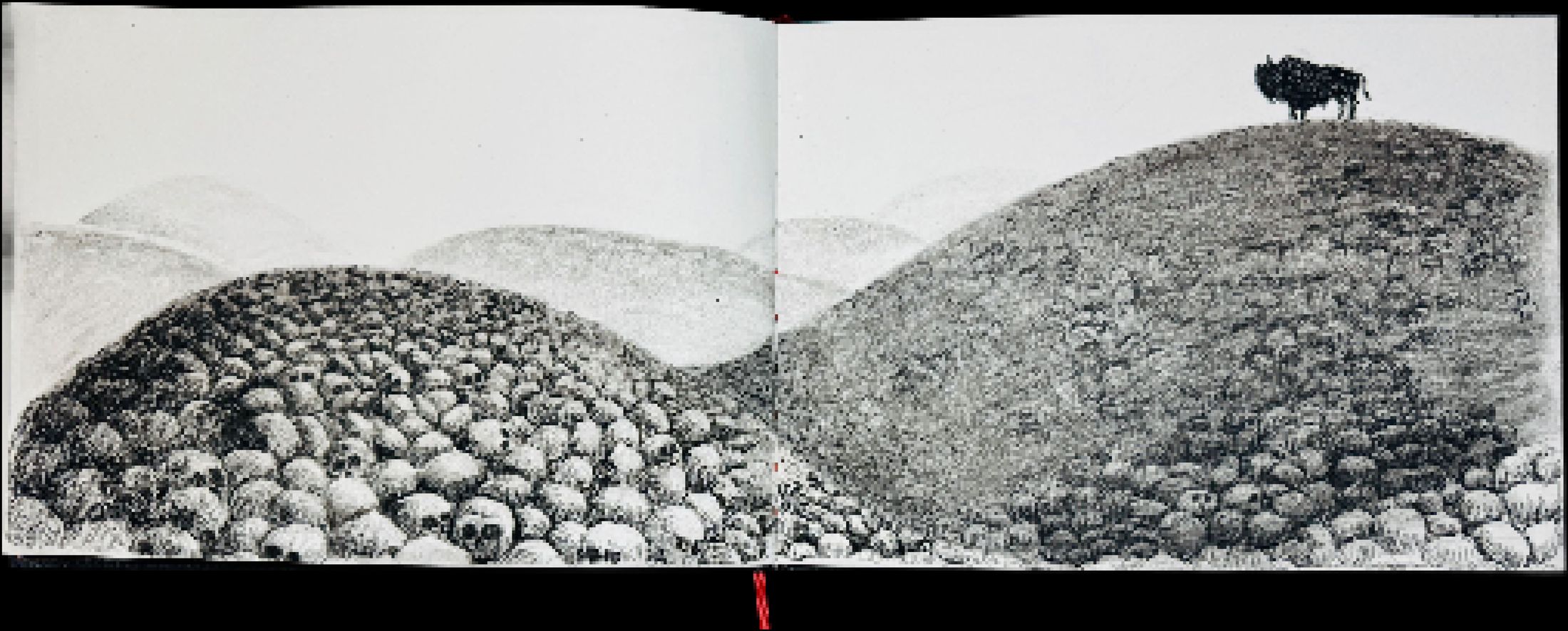
Initial compositional study and anatomical research for The Last Stand. Working out how to place a single living animal against the accumulated remains of the slaughtered.
Resolving the image
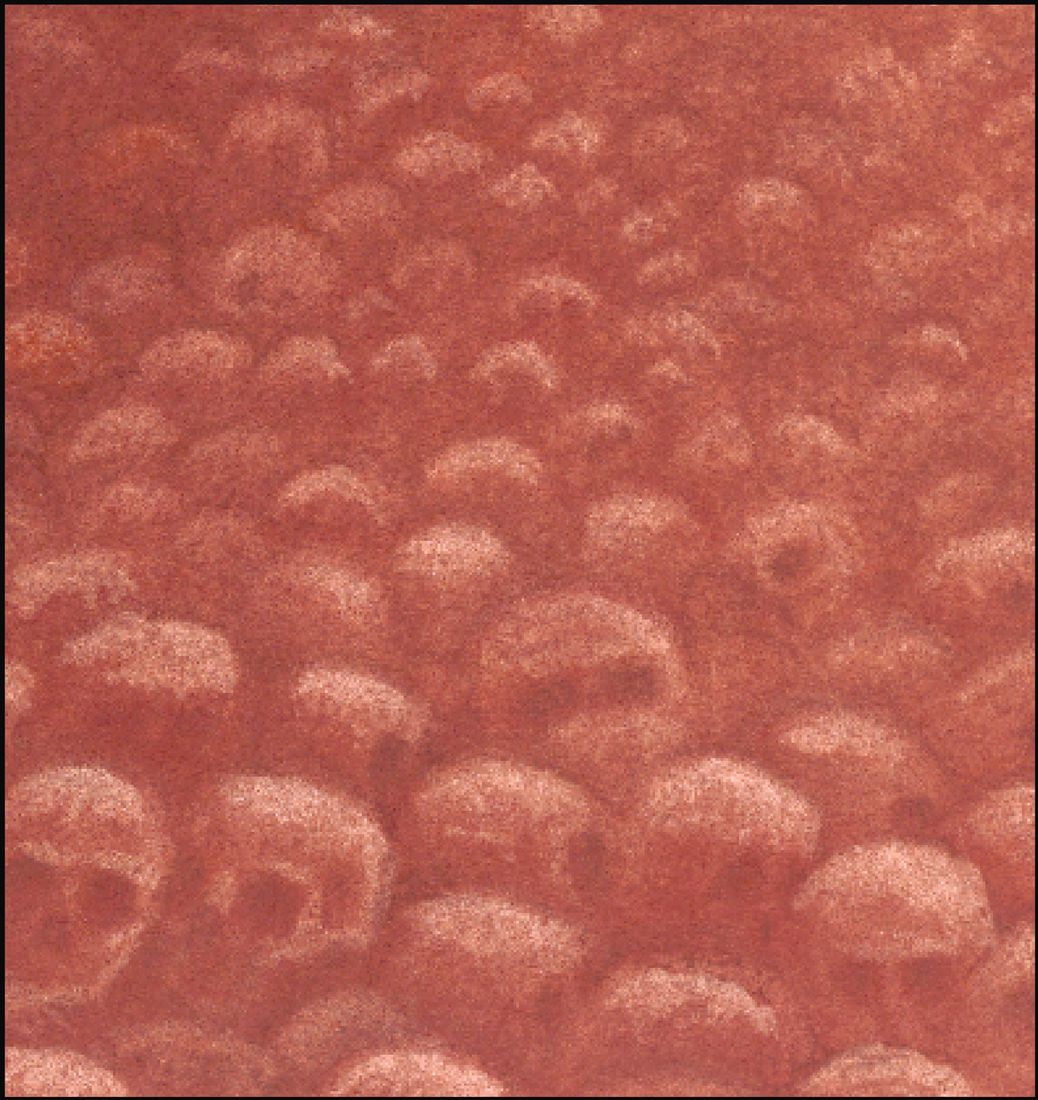
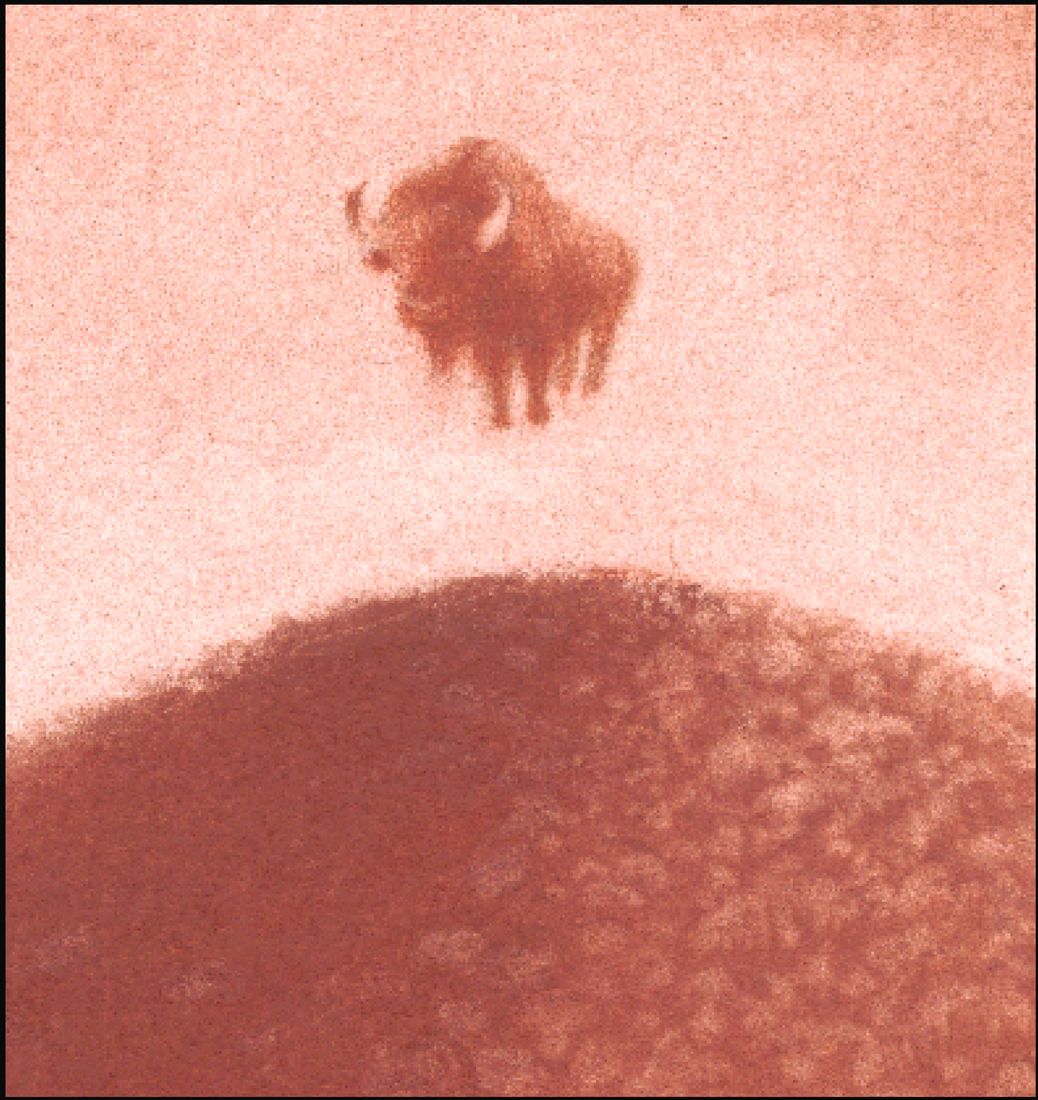
In the end, I blurred and softened the edges of the skulls so they felt more like a hint than an obvious image, something the viewer has to look closely to recognize. I was interested in the way they slowly dissolve into texture as they recede into the distance. The other challenge was making the bison, which is actually quite tiny, still read clearly as a bison in that foreshortened perspective. I think it works with surprisingly little detail.
The Last Run
Salmon · Sanguine and Conté on paper
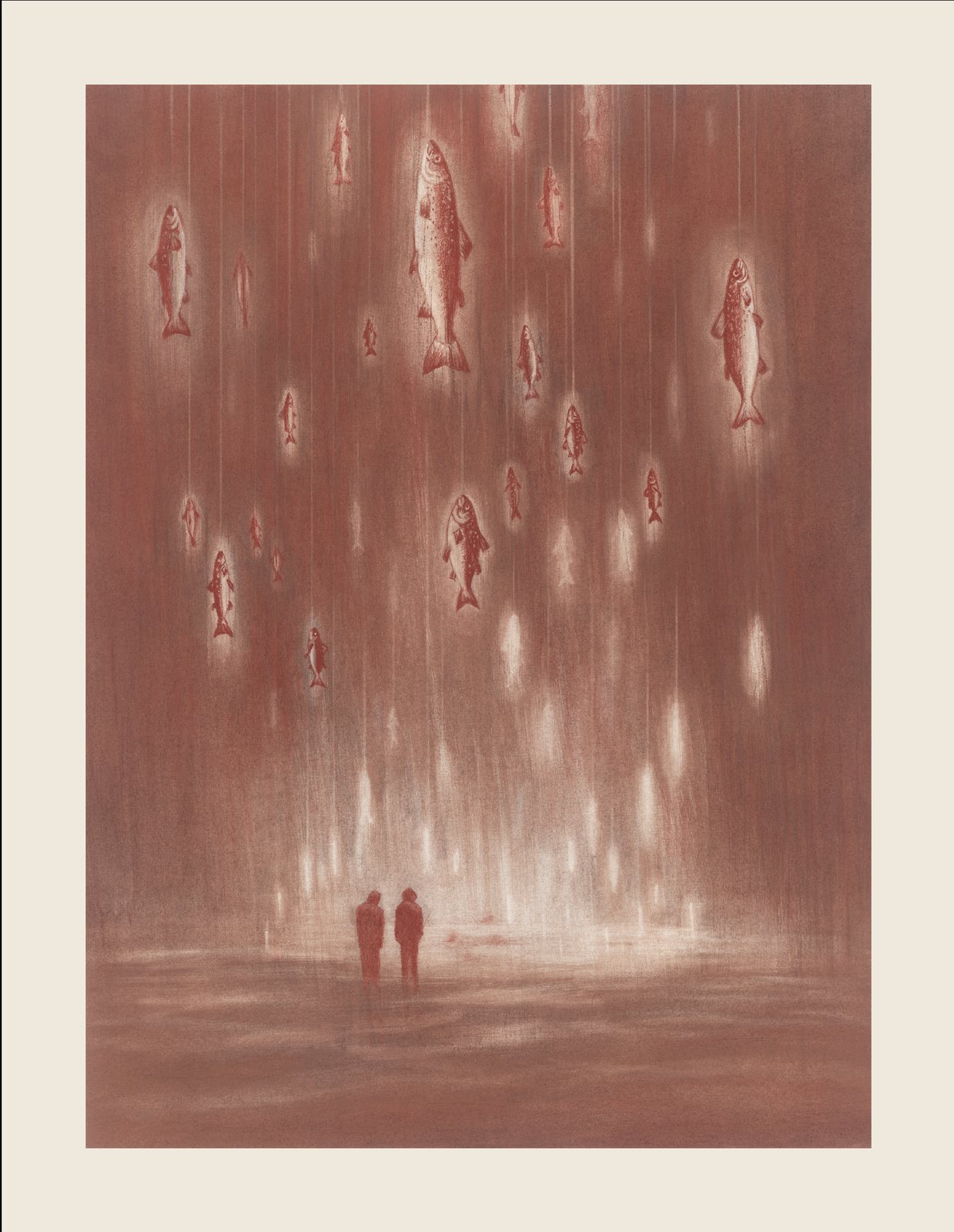
Salmon hang suspended in an enormous, cathedral-like space while two small human figures stand below, dwarfed by the scale of loss. The piece references the collapse of wild salmon populations worldwide, transforming a natural migration into a ghostly installation of absence.
Research & reference
The salmon run is one of nature's most dramatic spectacles: fish hurling themselves upstream against impossible odds, driven by instinct toward their birthplace to spawn and die. But wild salmon populations have collapsed worldwide. Overfishing, habitat destruction, pollution, and climate change have turned this ancient migration into a dwindling phenomenon. In some rivers, the runs have stopped entirely. The reference imagery for this piece came from both photographic documentation of salmon runs and from the visual language of museum displays and specimen collections: fish hung, labelled, preserved. The final composition merges these two sources, creating a space that is both cathedral and mortuary.
- Medium
- Sanguine Conté and Charcoal on Arches 300gsm
- Size
- 56 × 76 cm
- Price
- €900
Sketches and ideas
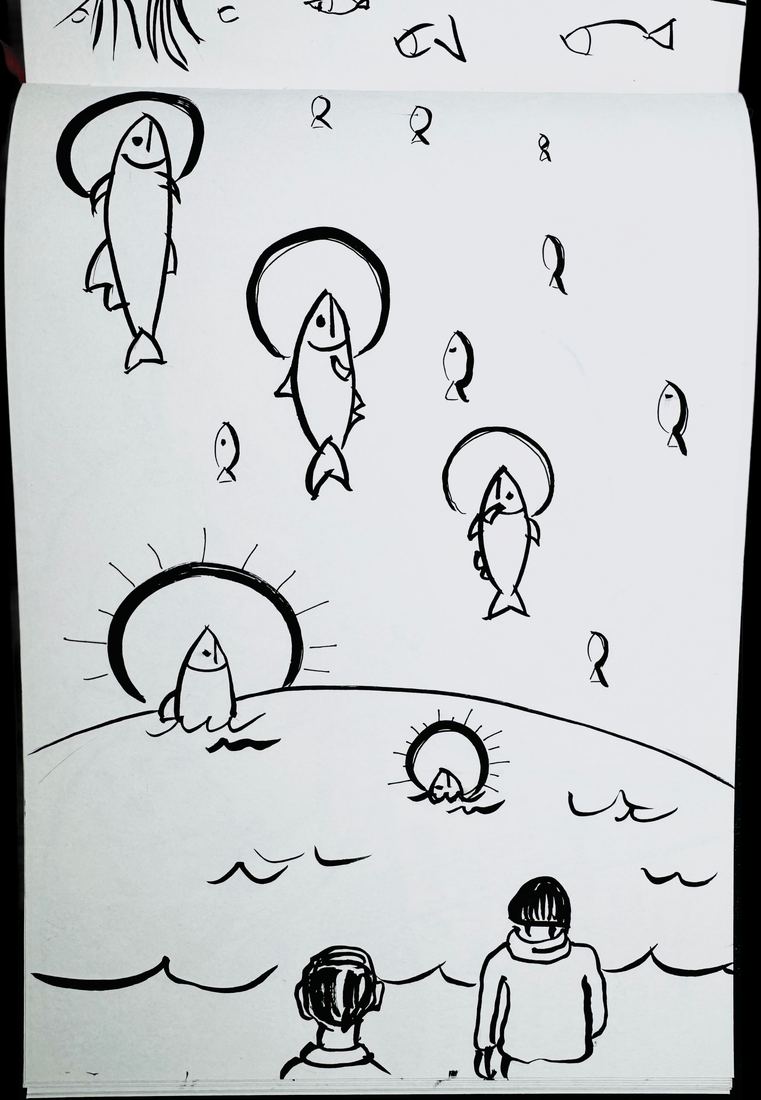
This sketch looks almost comical now, especially because the glow reads a bit like halos, but the idea was always that these figures were rising into the sky while the people below kept looking at the water and failed to notice their departure. Interestingly, this piece and the rhino ended up being the closest to my original sketch ideas, even if this drawing doesn’t really show that clearly.
Process
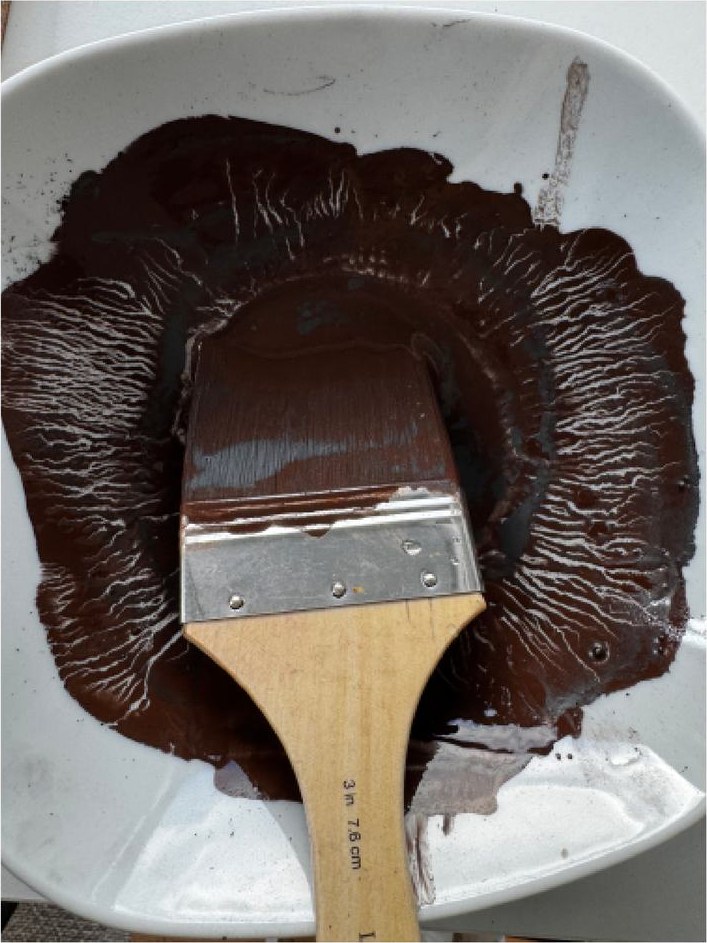
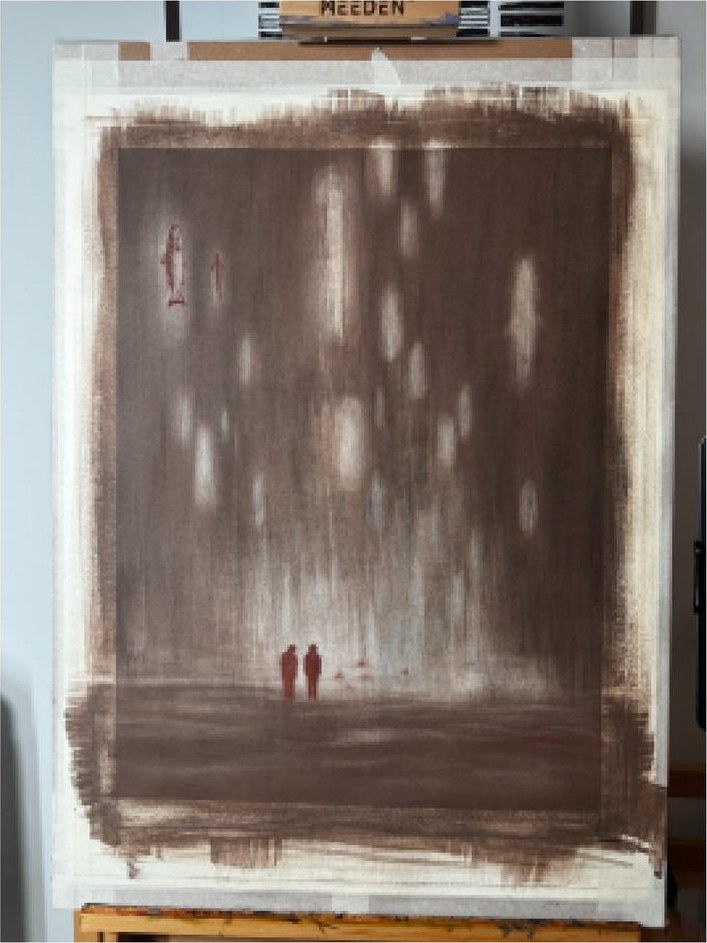
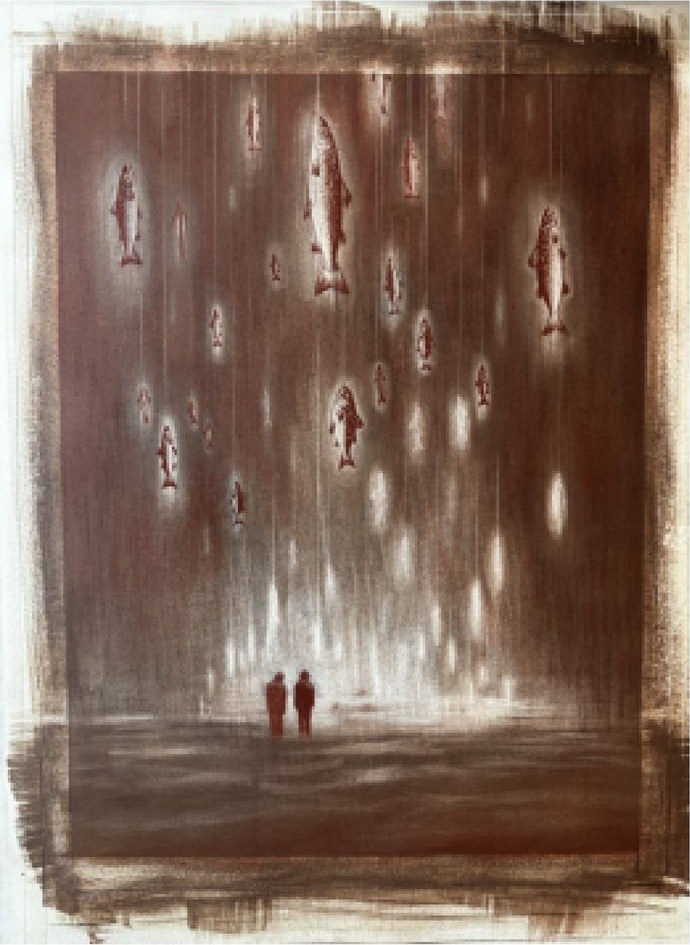
From initial marks to resolved atmosphere: mixing sanguine and charcoal into a wet mud, laying in the first suspended forms, then working the surface back and forth between wet and dry until the space deepened into something between cathedral and mortuary.
Details
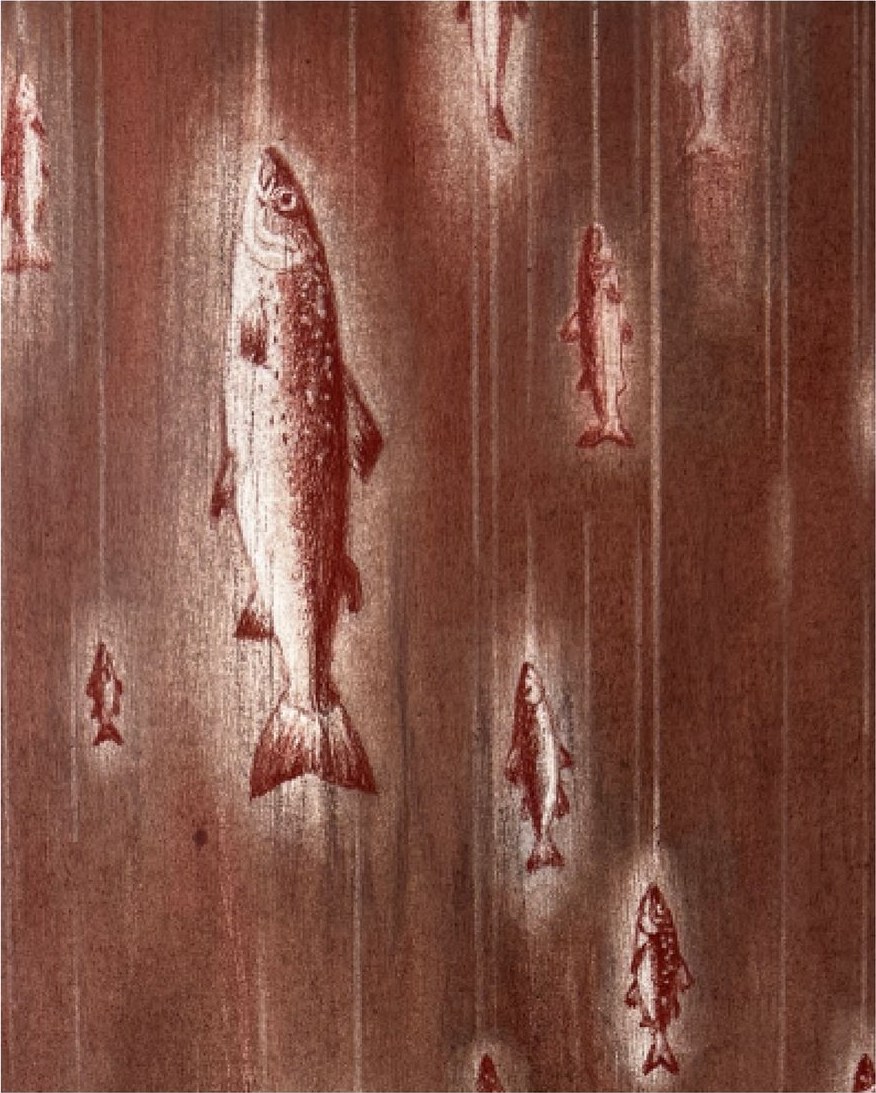
These cropped details from the final image show aspects of the piece that I’m especially pleased with. I love the way the wet working settled on the surface, creating a texture that almost resembles wood, which perhaps even foreshadows my later interest in working with wood itself. I’m particularly happy with the detail in both the salmon and the figures. Although the salmon are quite small, I worked hard to make them anatomically convincing, from the mouth and eye to the texture of the skin and the correct number of fins. With the figures, I wanted them to feel convincingly present in the landscape, as though they were wearing raincoats in wet weather. Even in silhouette, I think you can still read the light catching their heads and shoulders, their posture, and the fact that they are looking down rather than up at what is leaving.
The Last Breath
Logging · Sanguine and pastel on panel
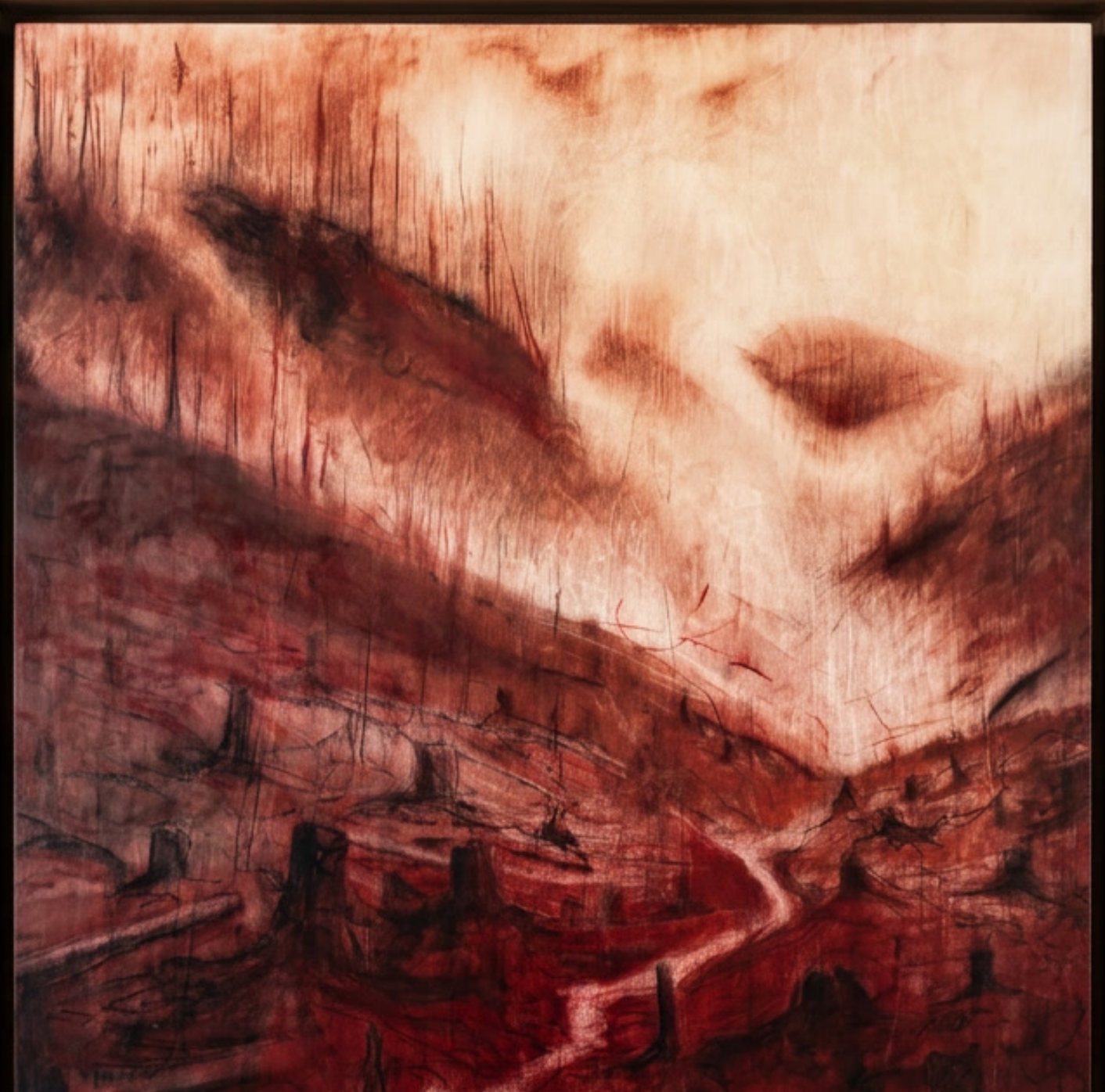
Deforested landscapes rendered in earth tones, scattered with stumps and fallen timber. These pieces incorporate handwritten deforestation statistics directly into the image, collapsing the boundary between visual art and informational protest.
Research & reference
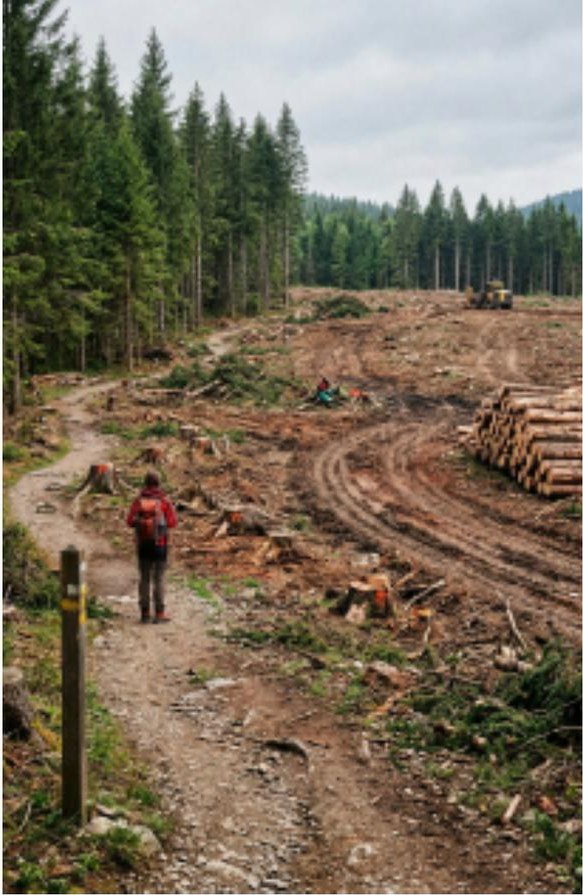
The logging and deforestation work grew directly out of my research into global forest loss. Each year, approximately 10 million hectares of forest are destroyed worldwide. I collected satellite images of clear-cut zones, photographs of slash-and-burn operations, and data on the paper and packaging industries, alongside AI-generated reference images I created to study clear-cut landscapes, based on photos taken while I was hiking in Ireland and Scotland. The statistics were staggering but also numbing, which is exactly the problem I wanted the work to address. I layer in handwritten statistics and fragments of text alongside the imagery, refusing to let the work exist as purely aesthetic. The roughness is the point. These are not precious objects. They are evidence.
- Medium
- Sanguine Conté, Charcoal and Pastel on cradled wood panel
- Size
- 100 × 70 cm
- Price
- €2,200
Sketches and ideas
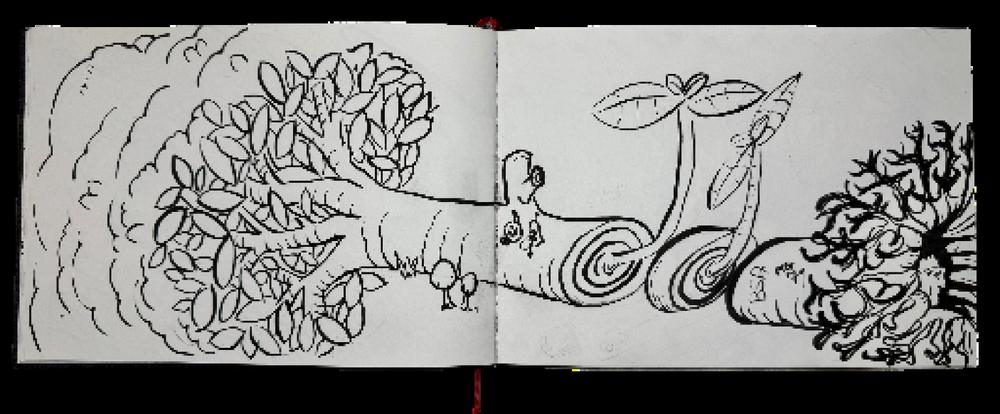
This sketch was the starting point for The Last Breath. The idea was of a tree cut down in the prime of its life, then improbably regrowing through the heartwood and concentric rings of its trunk. It is a surreal image rather than a literal one, but that was part of its appeal for me. The drawing is also layered, with the enormous fallen tree resting over a grid of urban roads, cars, and houses. By this stage I was becoming tired of making everything wholly apocalyptic, so I wanted to let a small note of hope into the work, even though the overall feeling is still quite dark.
Process
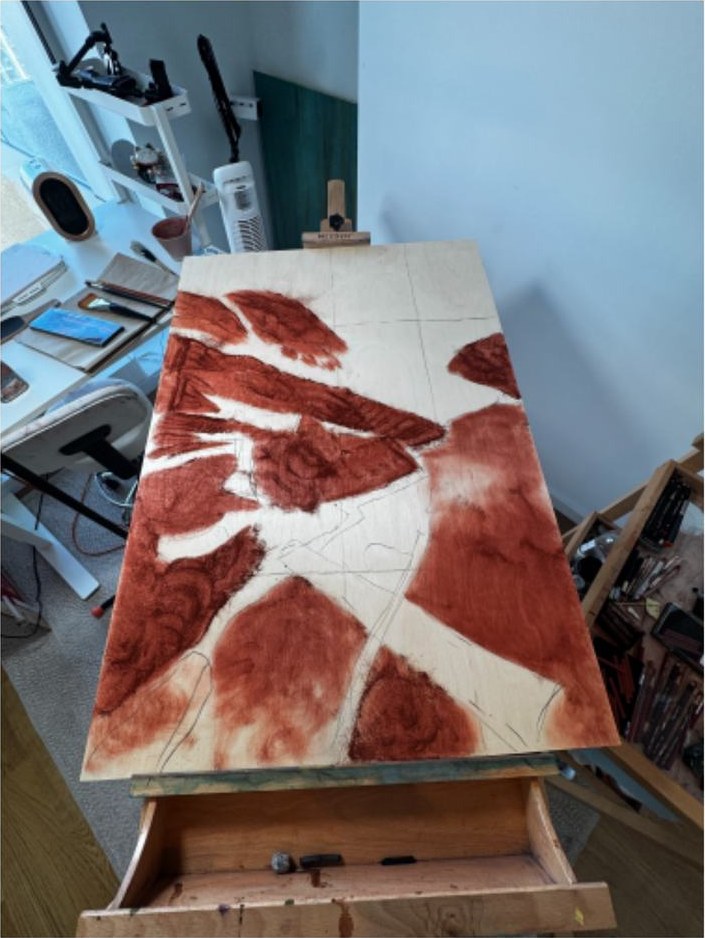
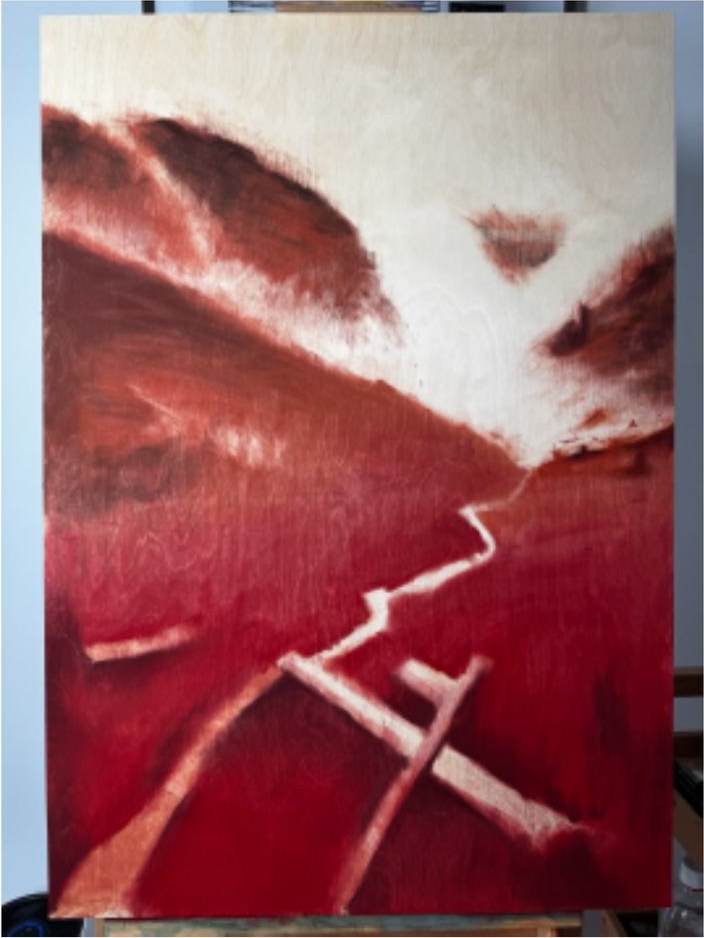
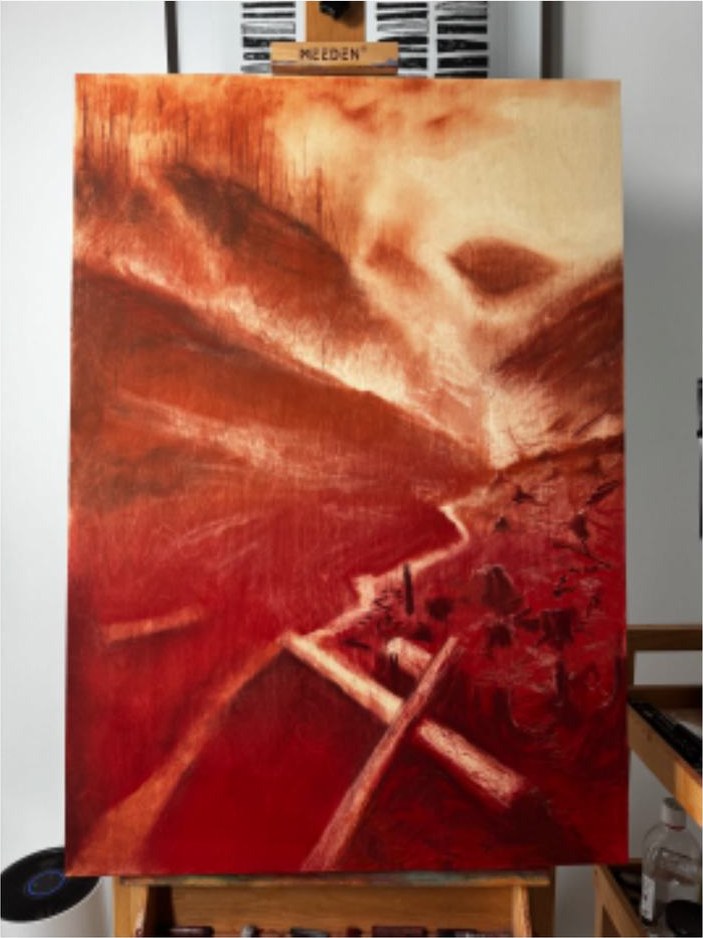
This piece marked a departure from the previous four in several ways. I wanted to work on wood, both because I liked the grain showing through and because there was something symbolically fitting about depicting cut trees on a surface made from cut trees. It was also different in that it had no central figure. Compared to the earlier works, it became less illustrative, more atmospheric, and slightly more contemporary in feel. I worked with dry sanguine on the wood, sketching the composition first in pencil, freehand but supported by a loose grid to keep the balance right. I used brushes to build the smoky sky, then worked back into the surface with pencil and chalk to develop the line work and finer detail. The finishing process introduced an unexpected turn. In my tests I had used Sennelier fixative, which worked well, but when I ran out I substituted Winsor & Newton on the final piece. It did not hold the surface as effectively once I applied the cold wax medium, and some of the detail was lost. Even so, the accident had an interesting effect: it unified the image and pushed it toward something deeper and more tonal, rather than sharp and linear.
Details
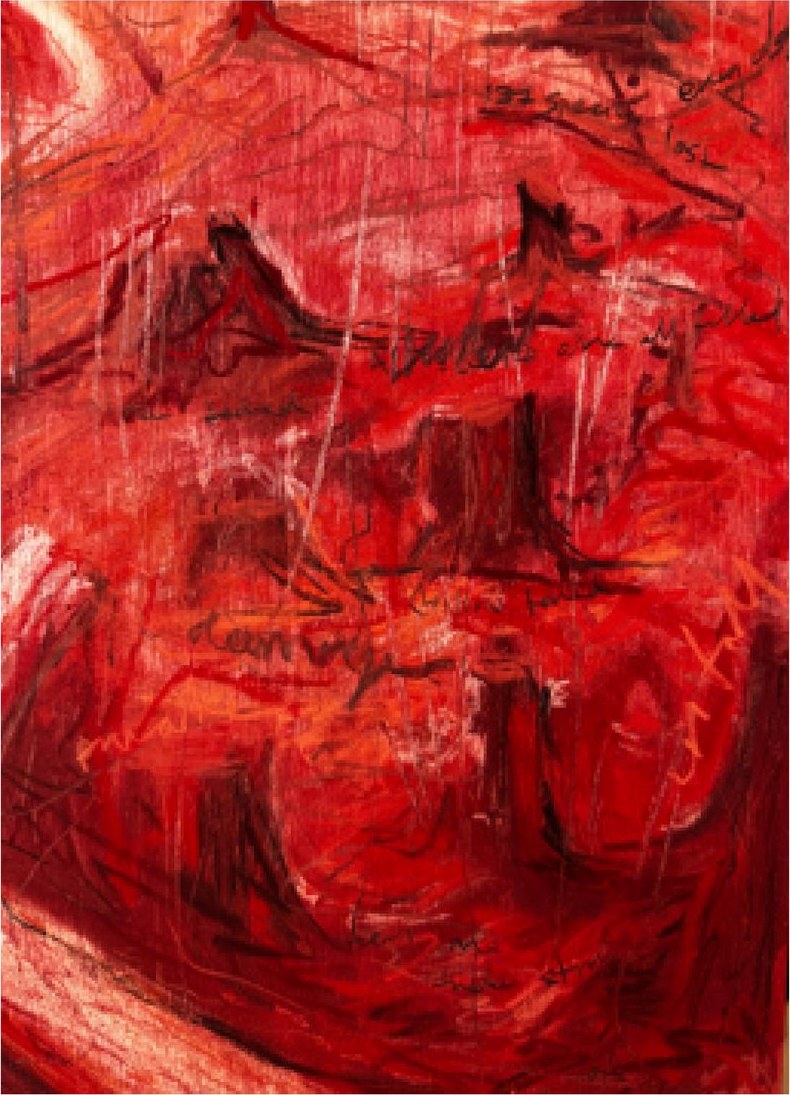
Detail views showing how handwritten statistics and fragments of text sit alongside painted imagery on the cradled wood surface. The words are sometimes legible, sometimes buried under layers of paint, echoing how information about ecological crisis washes over us without landing.
The Last Tree
Logging · Sanguine and pastel on panel
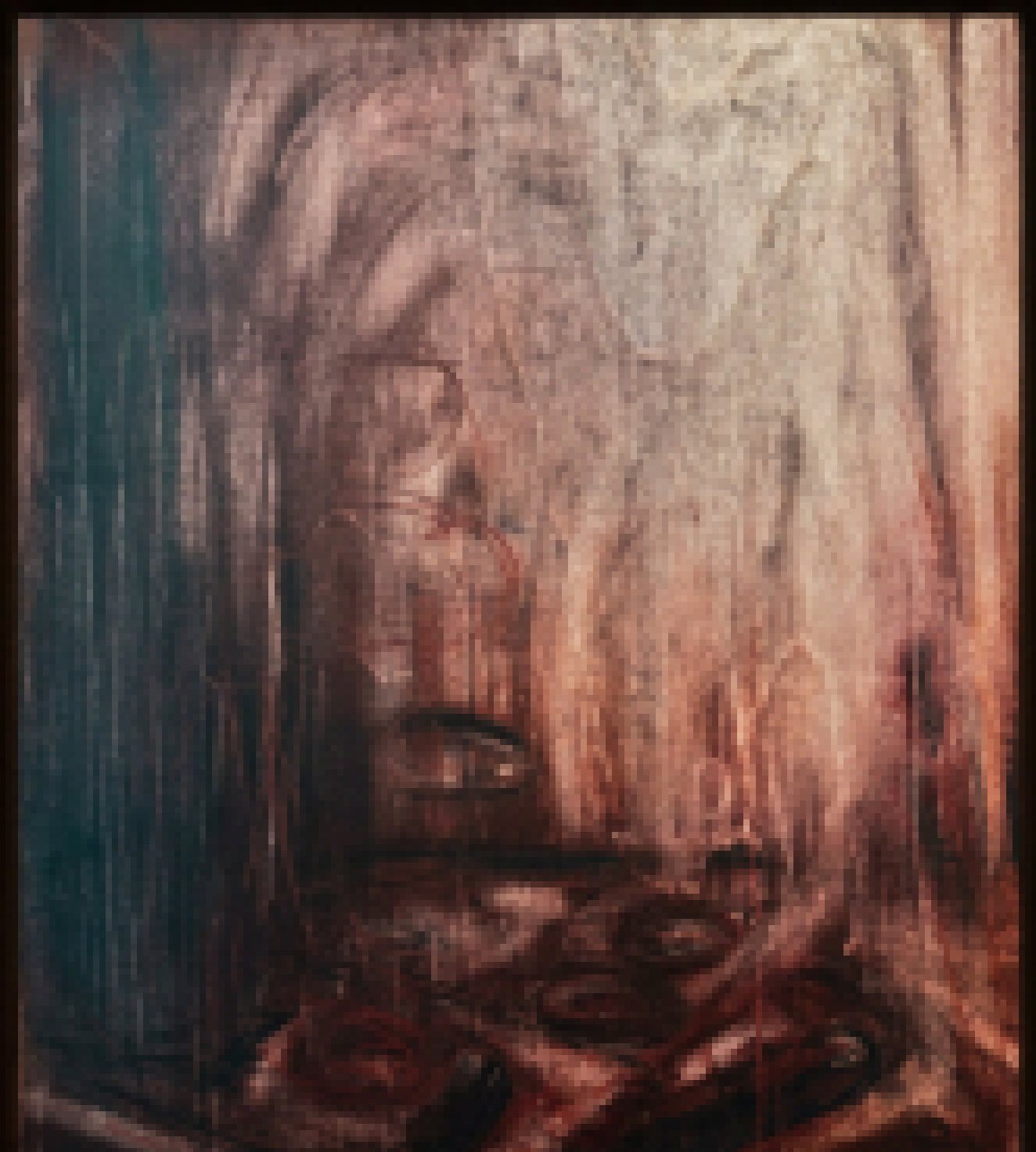
A smaller, more abstracted response to deforestation, where forms fragment and dissolve rather than describe. This piece evolved from The Last Breath into something looser and more atmospheric, letting the wood surface and mark-making carry the meaning.
- Medium
- Sanguine Conté, Charcoal and Pastel on cradled wood panel
- Size
- 30 × 40 cm
- Price
- €500
Process & rationale
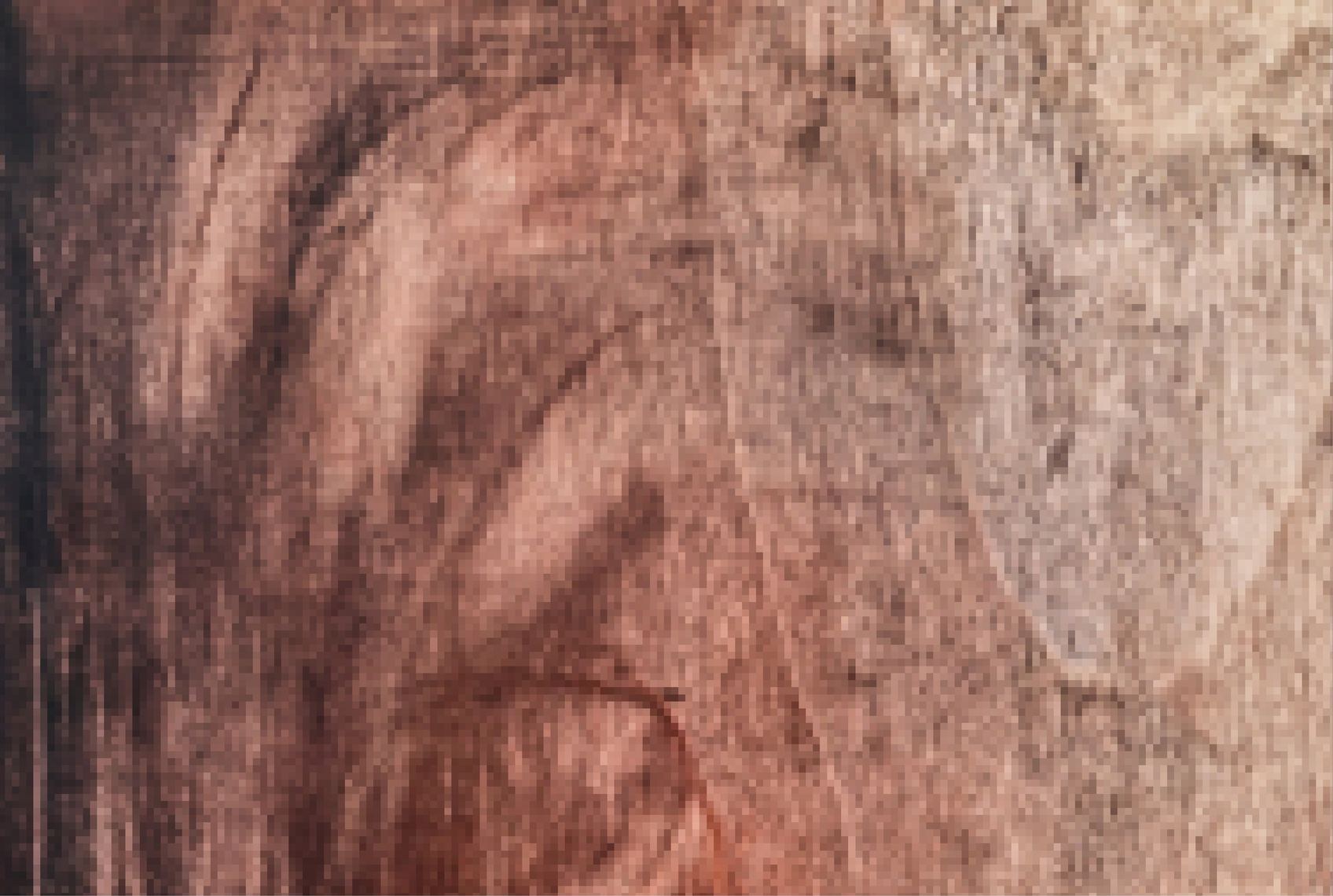
This piece is less narrative than the previous one, The Last Breath, and feels more like an evolution of it. It is much smaller, and became a space for testing and refining my process on wood, especially the use of dry pigment and cold wax as a seal. At the same time, I was trying to respond to feedback that my earlier work was too illustrative, and that the use of a central figure made it feel less contemporary than I wanted. I was also beginning to explore how text might enter the work, and how I might carry more of the immediacy and energy of my sketches into the more resolved pieces. Partly because I was working quickly and experimentally, the image began to loosen and fragment of its own accord. The forms became more abstract, initially through practicality, but I soon realised that this shift was doing something important. The abstraction opened up the composition, making it less fixed and descriptive, and allowing the work to hold meaning in a more atmospheric and suggestive way. What emerged was not a loss of storytelling, but a different kind of storytelling: less literal, more open, and in some ways more psychologically charged.
In exhibition
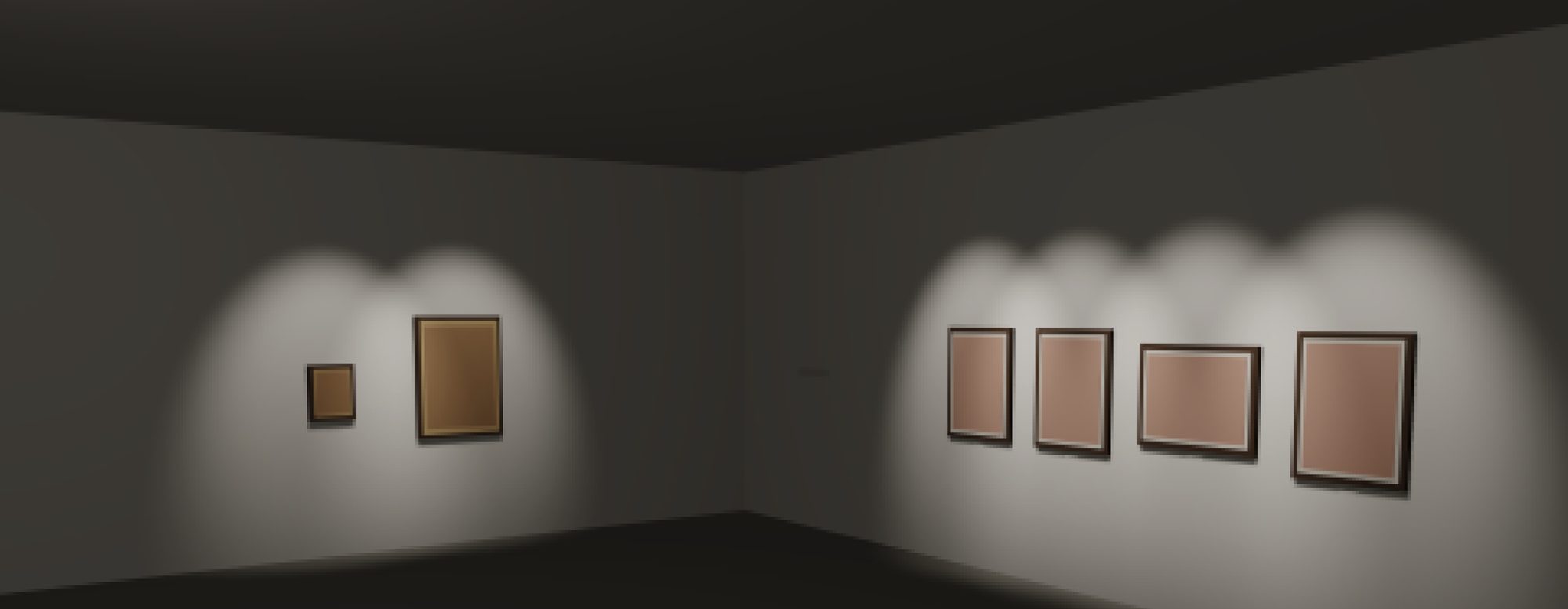
The six resolved works are presented across two walls. Wall 1 carries the four large-scale works on paper: The Last Ice, The Last Passage, The Last Stand, and The Last Run. Wall 2 carries the two wood panel works: The Last Breath and The Last Tree. All paper works are float mounted on cream backing board and framed in black American walnut with museum glass, sharing a centre line at 1,500 mm with 400 mm spacing between frames. This consistent rhythm allows the viewer to move through the series as a sequence of encounters — ice, horn, bone, water — each asking them to stay a little longer with what is being lost. The landscape orientation of The Last Stand breaks the cadence deliberately, widening the field of vision to match the vast, skull-filled landscape within the drawing. The two wood panels are presented in black American walnut tray frames, the edges of the cradle visible inside the tray, with The Last Tree's centre dropped 100 mm to create a visual dialogue with the larger panel without competing for dominance. Each work is individually lit by a warm-white track spot, designed to make the sanguine pigment glow against white walls.